
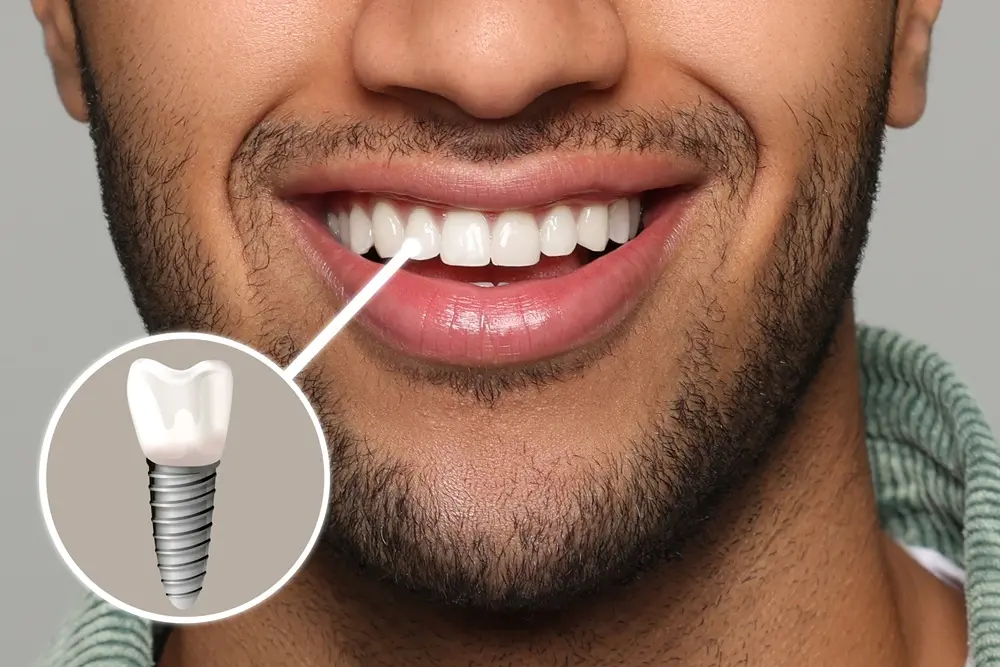
For many adults, dental implants offer a fixed way to replace missing teeth and restore daily function. A titanium post, abutment, and custom crown work together, but suitability depends on gum health and available bone. Because the dental implant process happens in stages, including placement, healing, and restoration, it helps to understand the timeline before treatment begins. Stable chewing, clearer speech, and jawbone support are among the benefits of dental implants. Below, we explain how treatment works and what a consultation can clarify.
In this article, you will learn:
- What a dental implant includes and who may qualify for treatment
- How each stage supports the replacement of missing teeth
- The benefits implants offer for chewing, speech, and jawbone support
- Why gum health, bone levels, and healing time affect treatment planning
What is a dental implant, and is it right for you?
A dental implant is a fixed tooth replacement consisting of a titanium post placed in the jawbone, an abutment that connects the components, and a custom crown. It may suit people who are replacing one or more missing teeth if they have healthy gums and sufficient supporting bone. A consultation confirms whether the jaw can support the planned treatment or whether preparation is needed first.
Expert tip: Before your implant consultation, note which tooth is missing, how long it has been absent, and any gum symptoms. The dentist can then record whether bone preparation is needed and where healing fits into the plan. The written treatment plan should show a clear next stage, not only “implant placement.”
Step-by-step procedure for replacing missing teeth
The dental implant process occurs in stages because the bone needs time to form a stable bond with the implant post.
- Tooth extraction — when a damaged tooth is still present
- Jaw preparation — grafting may be needed for weak bone
- Implant placement — the post is positioned in the jaw
- Healing — osseointegration joins bone to the implant
- Abutment placement — creates support for the restoration
- Crown placement — completes the visible tooth
Healing may take several months, so patience is part of the expected process.
Related categories:
Long-term advantages for your smile and jawbone
The main benefits of dental implants include a stable bite, a natural-looking appearance, and support for the jawbone after tooth loss. They can make chewing and speaking easier while helping reduce bone shrinkage around the gap. Unlike removable dentures, this option is fixed, requires no adhesive, and feels closer to a natural tooth. With consistent hygiene and regular dental visits, implants can provide long-lasting support for your smile.
How dental implants restore function and confidence
Use the consultation to connect each treatment decision with its next step. Ask how gum health and bone levels affect the plan, when healing is expected, and which final restoration will be used. This makes the timeline easier to follow and clarifies why placement, healing, and restoration are scheduled separately.
It is also helpful to discuss comfort, maintenance, and the differences between fixed restorations and removable dentures. The benefits of dental implants are most meaningful when the planned result fits your daily needs and you understand the care required after treatment.
A consultation can show whether preparation is needed and map out each stage of the dental implant process.
Review our dental implant services and book a consultation at St. Catharines Dental Centre to discuss suitable options.